

It’s a scene many of us know too well: you’re in the middle of vacuuming the living room, and suddenly, your cordless vacuum cleaner whirs down to a halt. The battery indicator blinks red, signaling an untimely death. Frustrating, right? You’re left wondering, “Why does my cordless vacuum die so fast?”
This is a common complaint, especially when considering a new purchase during shopping seasons like Black Friday. The answer isn’t always simple. The “real lifespan” of a cordless vacuum’s charge isn’t just a single number; it’s influenced by a combination of factors. Let’s dive into the real reasons behind the short runtime and what you can realistically expect.
1. The Heart of the Matter: Battery Type and Quality
Not all batteries are created equal. The type and quality of the lithium-ion battery used are the most significant factors determining runtime and overall lifespan.
Low-Cost Cells vs. High-Quality Cells: Many budget-friendly models use lower-grade lithium-ion cells. These cells have lower energy density, meaning they hold less charge, and they degrade much faster over time. After a year or so of use, their capacity can drop significantly, leading to the dreaded “it used to last longer” feeling.
Battery Management System (BMS): A good BMS is the brain of the battery pack. It protects the battery from overcharging, deep discharging, and overheating—all of which can permanently damage the cells and shorten their life. Cheaper vacuums often lack a sophisticated BMS.
2. The Power Hunger: Motor Efficiency and Suction Settings
The motor is the biggest power consumer in your vacuum. Its efficiency and how you use it play a huge role.
Inefficient Motors: A less efficient motor has to work harder (draw more power) to generate the same level of suction as a high-efficiency motor. This wasted energy directly translates to shorter runtimes.
Max Power Mode All the Time: This is perhaps the biggest user-controllable factor. Running your vacuum on its maximum suction setting is like driving your car always at full throttle. It drains the battery exponentially faster. Using a lower or auto mode for daily cleaning can dramatically extend your cleaning session.
3. The Silent Killers: Charging Habits and Heat
How you charge and store your vacuum has a long-term impact on battery health.
Frequent Partial Charges: Unlike old Ni-Cad batteries, modern lithium-ion batteries do not have a “memory effect.” In fact, they prefer partial discharges over being consistently run down to 0%. Frequently draining the battery to zero and then charging it to 100% can actually stress the battery.
Heat is the Enemy: Exposing the vacuum or its battery to high temperatures (like leaving it in a hot car or charging right after a heavy use when it’s hot) accelerates chemical degradation inside the battery cells. Always allow the vacuum to cool down before charging.
4. The Unseen Drain: Maintenance and Blockages
A vacuum that isn’t properly maintained has to work harder, consuming more power.
Clogged Filters or Dustbins: A full dustbin, a clogged filter, or hair wrapped around the brushroll creates air resistance. The motor must then expend extra energy to overcome this blockage to maintain suction, leading to faster battery drain.
Worn-out Parts: Over time, brushes and filters wear out, reducing overall efficiency.
The Real Lifespan Explained
So, what’s the real lifespan? There are two ways to look at it:
Per-Charge Runtime : This is what the manufacturer states, but it’s almost always measured on the lowest power setting with a brand-new battery. In real-world use on higher settings, you might get only 10-20 minutes. A high-quality vacuum should provide a consistent 25-50 minutes of mixed-use cleaning.
Overall Battery Lifespan : A quality lithium-ion battery should last between 2 to 5 years before you notice a significant (e.g., 30-40%) drop in its per-charge capacity. Poor-quality batteries can degrade within a year.
Tired of Constant Interruptions? Meet a Vacuum Built to Last.
If you’re done with the short runtime and constant battery anxiety, especially when looking for reliable appliances during the busy shopping season, it’s time to look at a vacuum designed from the ground up for performance and endurance.

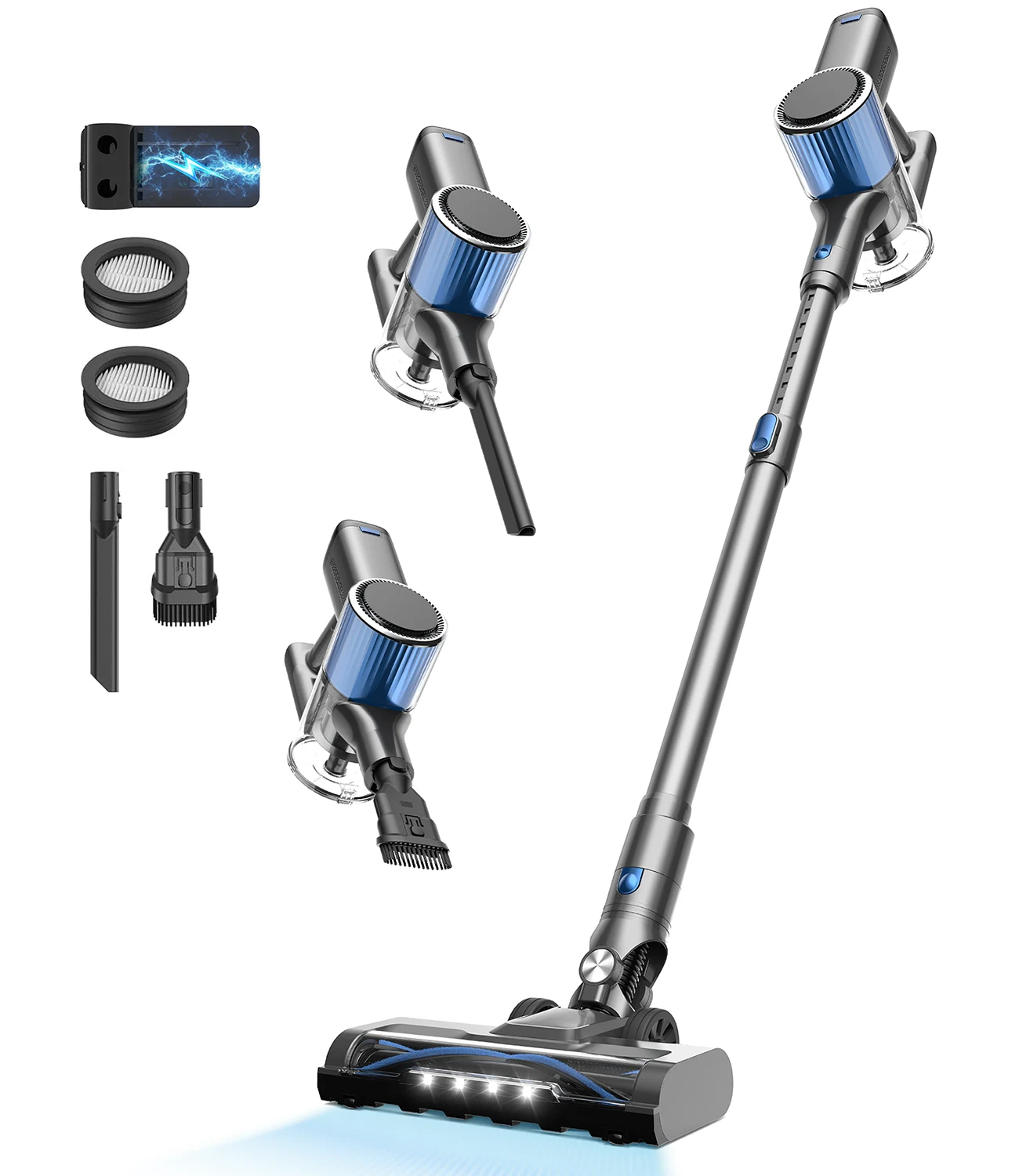
The OMESER S15 Cordless Stick Vacuum is engineered to tackle the very issues that cause other vacuums to fail prematurely.
Key Features that Make the Difference:
High-Quality Series-5 Lithium Battery (Long Runtime): We use premium lithium-ion cells for higher energy density and a longer overall lifespan. Enjoy extended cleaning sessions without constantly checking the battery indicator.
480W High-Efficiency Motor (55mm Large Chamber): This powerful yet efficient motor generates strong suction without unnecessarily wasting power. The large chamber design improves heat dissipation, contributing to motor longevity.
Max 55KPa Suction (3 Adjustable Modes): Tackle deep-set carpet dirt on Max mode, and switch to a lower, power-saving mode for quick daily pick-ups. This flexibility puts you in control of the battery life.
Durable Build (Scratch & Drop-Resistant): Built to withstand the bumps of everyday life, the OMESER S15 is a reliable partner for your home.
[html_block id=”9755″]
Stop letting a dying battery cut your cleaning short. Upgrade to the OMESER S15 and experience a cordless vacuum that works as hard as you do.